


DOMETIC DESIGN
LANGUAGE UPDATE
Update of Dometic's
design language w. focus
on portable products
YEAR:
2023
BRAND / CLIENT:
DOMETIC
ROLE:
INITIATOR AND CO-LEAD
STATUS:
IN USE
Dometic, a company undergoing transition
OEM Partner
Providing parts and components to Boat, RV, Truck and Caravan manufacturers
Dual Channel Strategy
Providing parts and components to OEMs while expanding sales for D2C/B2C
The existing design language lacked flexibility, principles, and general guidelines for portable products.
It didn't support the transition Dometic was undergoing.
Seeing new employees, colleagues who'd transferred in through acquisitions, consultants, and even myself struggling to grasp what Dometic design actually relied on, I initiated this project to update and create new guidelines and principles, with an extra focus on portable products. The goal was partly to make things easier for us designers, but also to support Dometic's transition from an OEM partner to a Dual Channel Strategy.
This project was co-led with my colleague Johan Linde (fd. Bohman).
Proccess
Define Objectives
Interviews
Workshops
Synthesis
Review
Project Objectives:
Build strategic rationale
Create high-level design principles
Define high-level design attributes
Define signature elements for portable products
Project Actions:
Team workshops
Designer Interviews
Trend and competitive landscape analysis
Portfolio Review
Review of current guidelines


Becoming a D2C brand requires a personality that consumers can resonate with.
The old guidelines lacked that, having been built for an OEM partner business. We needed to define Dometic's personality through its consumer-facing, brand-building products.
Design Team Interviews
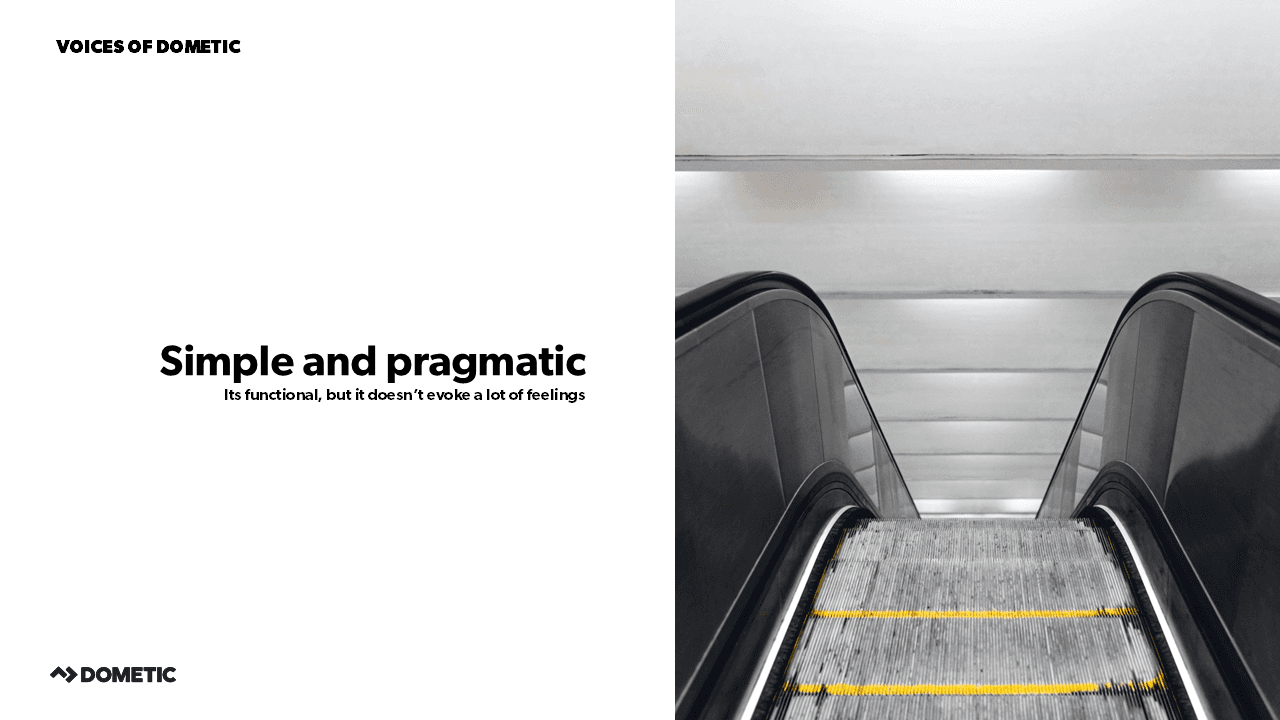
To understand what we internally thought about our brand, we interviewed all Dometic designers globally, including those from newly acquired companies whose perspective on the brand was still fresh.


Design Team Workshops
We planned and facilitated team workshops to gather the collective expertise of the team, creating principles that would work for us while also meeting our business strategy goals.
These sessions were built around future trends and legislation, to ensure our principles would be future-proofed.


Synthesis


Outcome.


Before
After
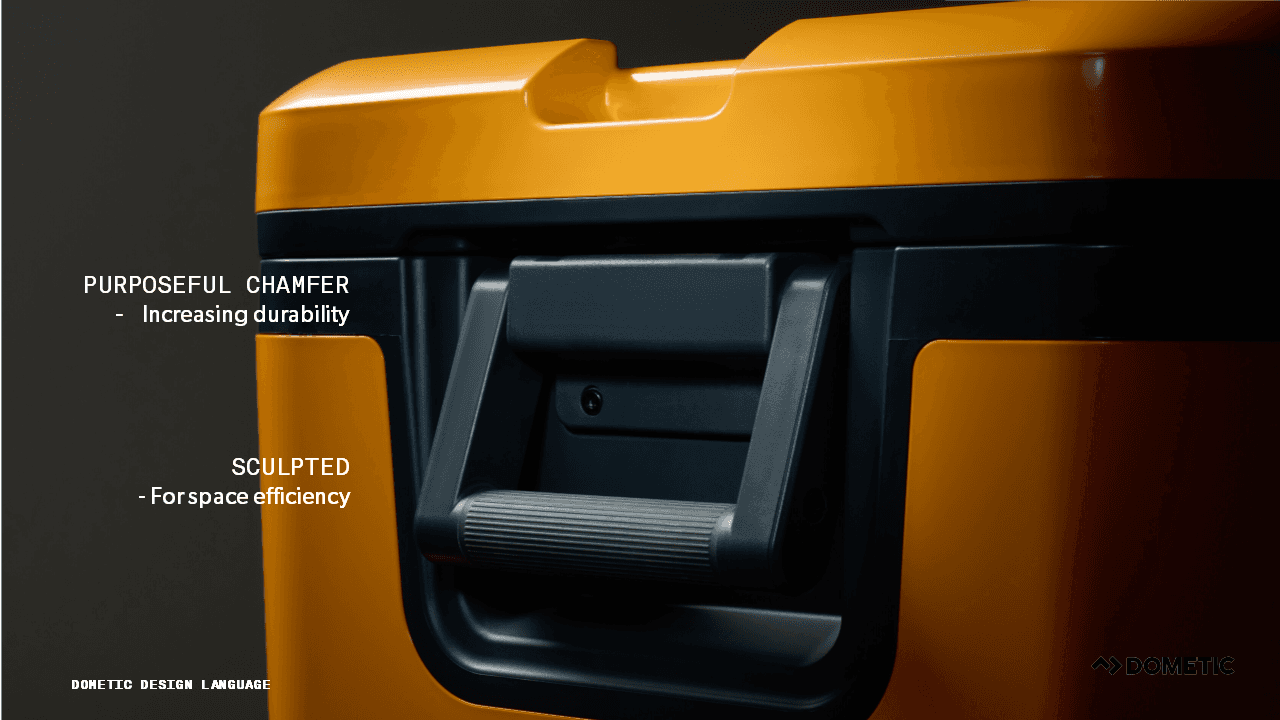
Result
The new attributes and principles have become part of daily practice.
All 13 designers globally now reference them in their work, and every product currently in the pipeline adheres to them.
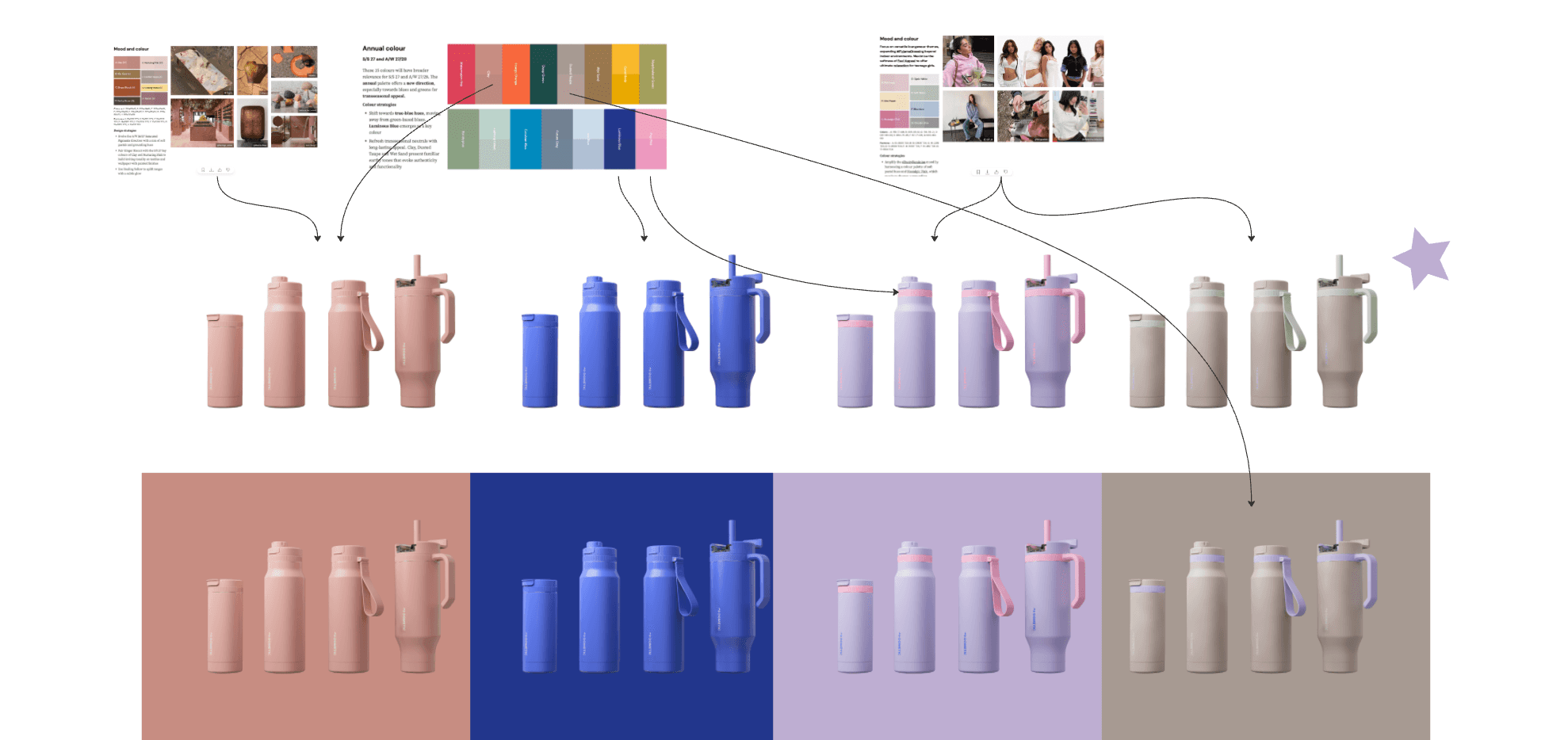
In addition to updating the design language, I was responsible for adjusting the color palette to support a more expressive brand and product presence.
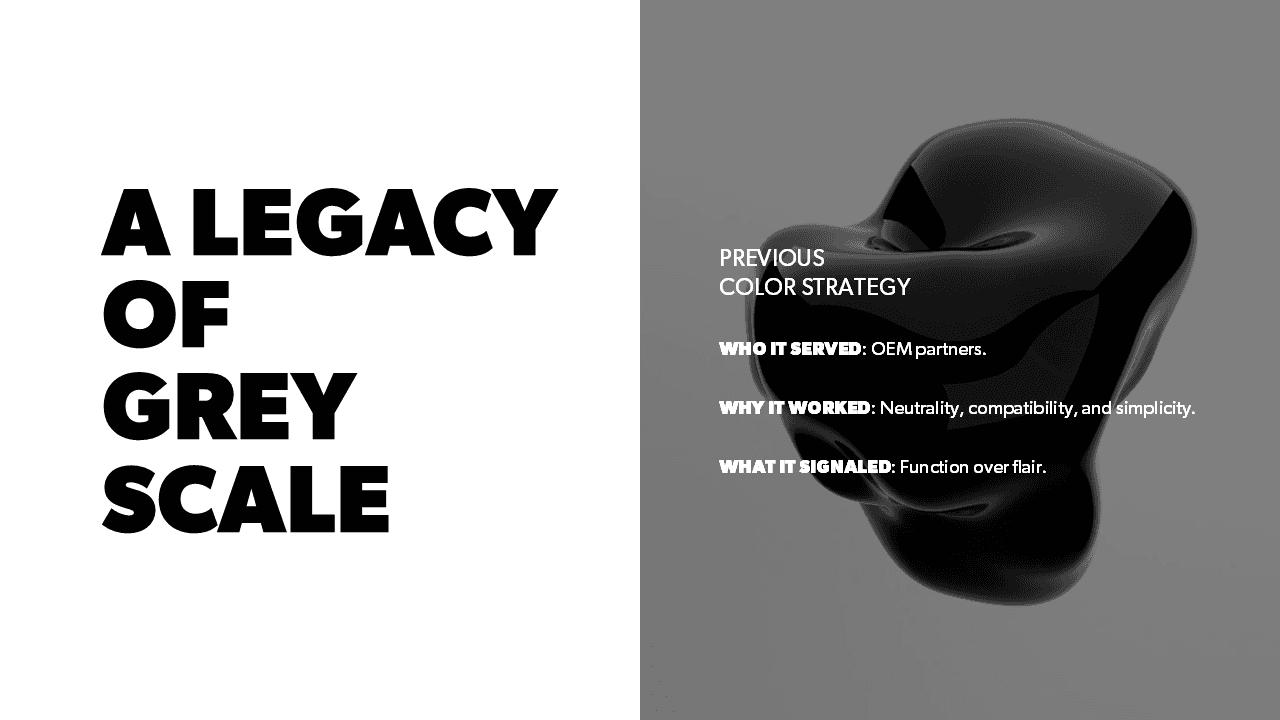
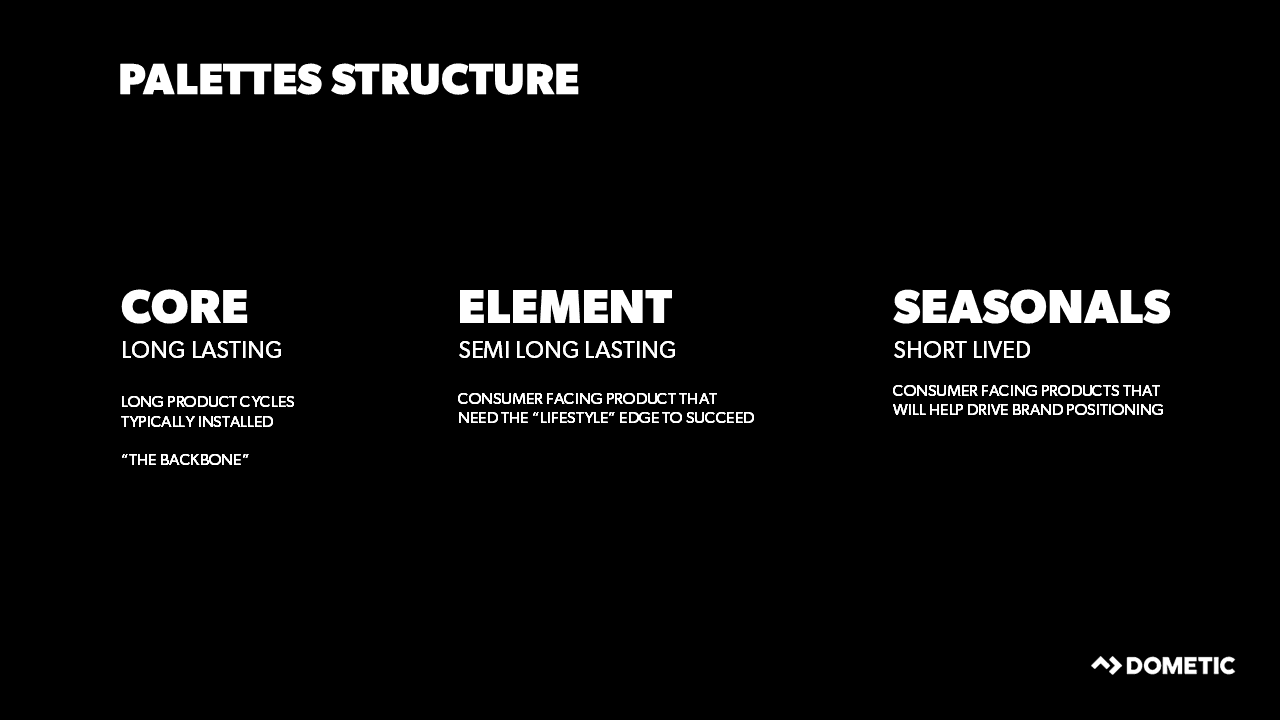
Dometic's color palette had been updated before this project, moving beyond its core grey tones to support D2C products. But those colors didn't quite work once applied to the new guidelines and tone the design team was aiming for. We were also developing more personal products, like drinkware, which needed a broader and more distinct color range than Dometic had traditionally used. Drinkware, in particular, was seen as a vessel for brand building and reaching new consumer groups, which called for an even more expressive use of color.




Seasonal Dev. Process